
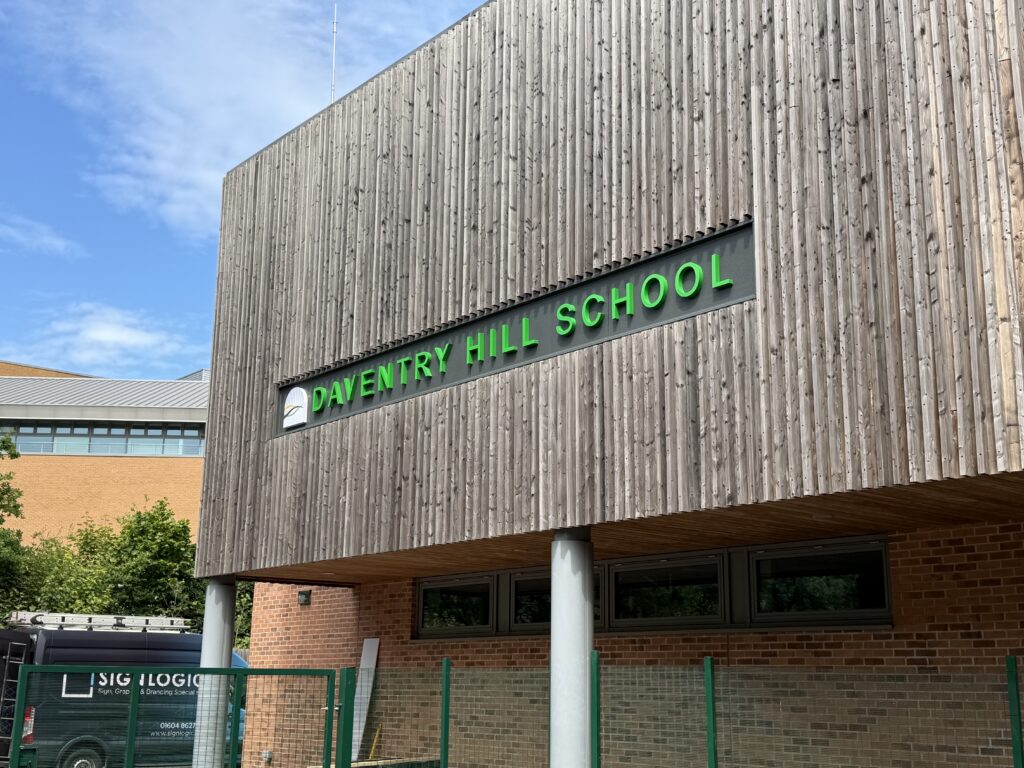
From making a great first impression at the school entrance to helping pupils, staff and visitors find their way around, the right signage makes a real difference.
In this guide, we explore five essential types of school signs, including main building signs, entrance signs, wayfinding, indoor displays and communication-friendly signs that help children with additional needs navigate their environment.
1. Entrance signs
School entrance signs are arguably one of the most important types of sign for schools, helping your staff and students find you. And a well-designed and good quality welcome sign will create a positive long-lasting impression to parents, students and the wider community.
Consider installing a school welcome sign:
- Near your main entrance gate – perhaps a simple signage panel mounted onto a school fence, or a post and panel sign installed into the ground.
- Outside your reception area – often, this is an ideal spot for your main fascia sign.
- Somewhere that’s highly visible to passing footfall and traffic – consider an additional outdoor building sign if you’re in a busy area to make sure your school is highly visible.
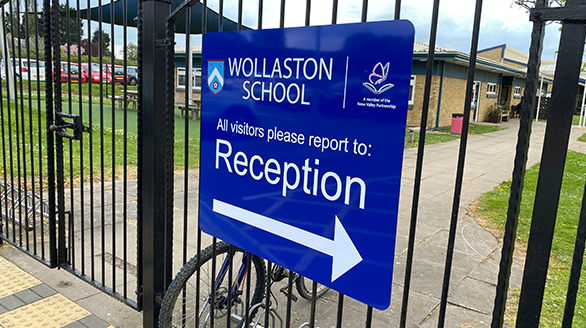
Bilingual signs for schools
Welcome signs in different languages for schools are becoming increasingly popular – particularly in areas with a highly diverse community with lots of different nationalities.
Having bilingual signs will help students and visitors who speak other languages to feel welcome and included at your school.
2. Directional signs
Wayfinding signs help students find their way around your school without any fuss.
Some wayfinding systems include:
- Multi-directional fingerpost signs – ideal for schools with a number of buildings, where each finger points in the direction of a different location.
- Post and panel signs and totems – perfect for displaying a map of the school with the label ‘you are here’.
- Internal directory signs – these systems can be mounted to the wall or free-standing and should be placed in high traffic areas.
- Room signs for schools – there are lots of options available for room number signs, including custom plaques, Foamex boards, brushed or chrome aluminum signs, and more.
3. Indoor displays
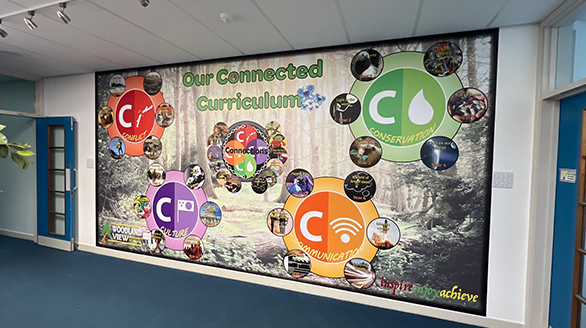
Indoor signs for schools can be used to create inspirational spaces, introduce your leadership team and communicate your school’s mission.
Some ways to use internal signage at your school:
- Custom wall graphics and vinyl lettering – create zones within shared spaces, such as canteens, corridors, libraries, study centres, and more. For example, a bespoke vinyl wall wrap can create a calming, sensory space for children with special needs.
- Notice boards – help keep your students and their parents informed of any news and upcoming events.
- Interactive awards and champion’s boards – these can be magnetic or dry-wipe, and customised to your school’s branding.
4. School Ofsted signs
Shout about your Ofsted rating with large outdoor banners. Promotional PVC banners are affordable, durable and eye-catching, and can be mounted to your school fence or the side of your building.
You’ve worked hard to achieve your rating, so make sure everybody hears about it with custom Ofsted banners.
5. Signs for children with communication difficulties
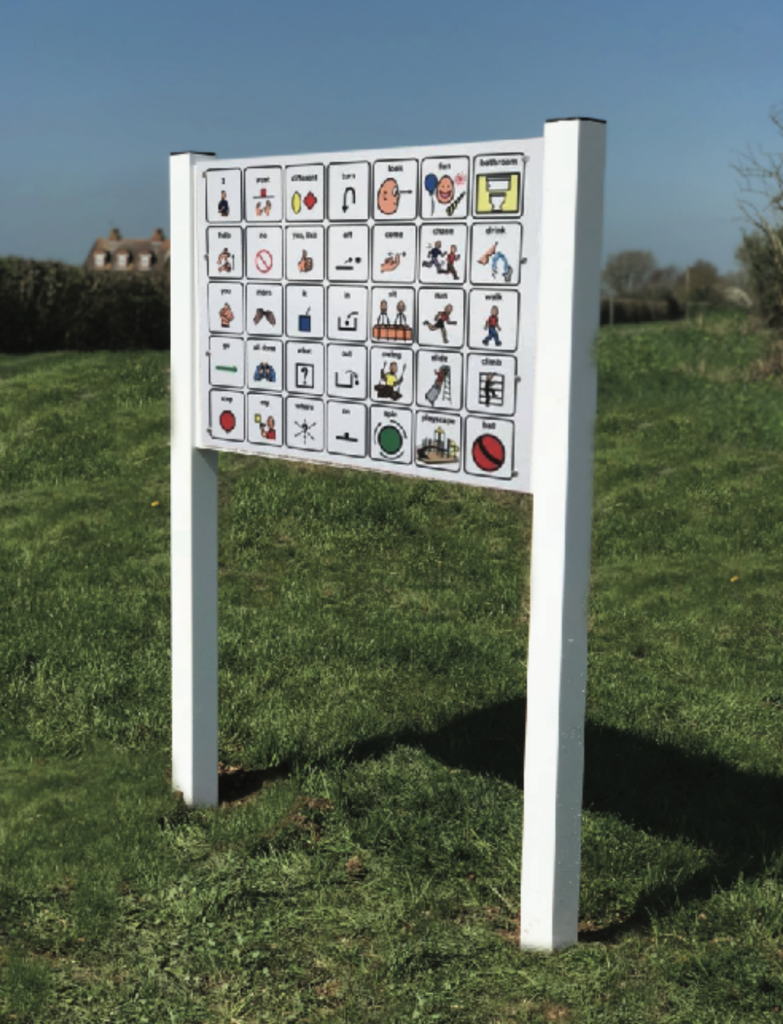
The school experience should be inclusive for everyone, and that means for those with communication difficulties too. Some children with special educational needs may require visual aids, such as Makaton and PECS.
Accessible signage can be used to improve experiences for children with communication difficulties:
- Custom communication boards – widget symbols with key phrases can be placed around the school. For example, school playground signs may feature symbols for ‘toilet’, ‘water’ and ‘rest’. Similar boards can be made for classrooms, the canteen, and other key areas.
- Interactive classroom door signs – help children find the right classroom.
- Magnetic ‘first-then’ sequence boards and timetables – perfect for communicating what will happen throughout the day to children with autism. For example, ‘first circle time, then art’.
- Health and safety signs in schools – should also be accessible for children with communication difficulties, providing visual support to help them understand. For example, “when you hear the fire alarm, exit the school” or “look left, right, left, before crossing the road” for road signs near schools.
Looking for Signage?
Our experts are here to guide you through the options and provide a free, no-obligation quotation. Get in touch today!